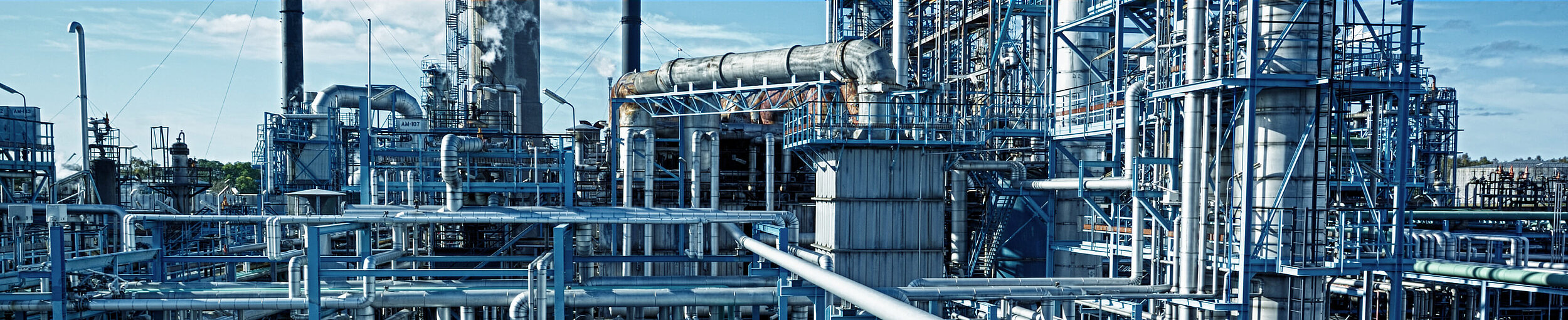
Energy supply in Germany is increasingly coming from renewable sources. The share of renewable energy in final energy consumption for heating and cooling rose to 17.4 per cent in 2022 (15.8 per cent in 2021). The situation in the transport sector is not quite as advanced. The share of renewable energy remained at the same level in 2022 as in 2021. However dynamic the expansion of renewable energies may be, oil and gas will remain dominant in the country’s energy supply for a long time to come. This applies in particular to the situation in German companies. Even though businesses are making considerable efforts to minimise their dependence on fossil fuels, oil and gas will continue to dominate the energy supply in German companies for a long time to come.

This has significant implications for the extraction of fossil fuels. The necessary infrastructure also faces considerable challenges, because: not only is the extraction of oil and gas a highly complex process, but the infrastructure required to support it must also meet the most stringent standards. This is one of the key reasons why stainless steel plays such a vital role in the oil and gas industry. Due to their chemical composition, media such as oil and gas place particularly high demands on stainless steels. Specifically, these include high resistance and resilience, as well as high compressive strength when appropriately designed.

Enquire about stainless steel blanks for the oil and gas industry
Stainless steel – ideally suited to demanding requirements

Against this backdrop, companies in the oil and gas industry tend to favour stainless steels of all types. Thanks to their material properties, these materials are ideally suited for use with oil and gas. In addition to high strength and maintenance-free operation, stainless steels offer excellent corrosion resistance. At the same time, depending on its composition, the material is also protected against chlorides and chemically aggressive substances that adversely affect oil and gas operations. There are also other material properties whose benefits are particularly evident under demanding conditions. Among other things, stainless steel withstands stresses such as salt water, acids or sand. This makes stainless steel synonymous with durability. For example, the material is capable of extending the service life of offshore drilling rigs. So-called super-duplex steels withstand extreme corrosion and high-pressure conditions. This is why they are often used in oil and gas exploration. Companies in the oil and gas industry also value austenitic stainless steels and nickel alloys for their high resistance to heat and corrosion.

Applications of stainless steel in the oil and gas industry

From the perspective of the oil and gas industry, corrosion resistance, strength and durability are key characteristics of the material. Against this backdrop, stainless steels are used in a wide variety of applications:

  • Pipelines and vessels
    Stainless steel pipes and vessels enable liquids and gases to be transported safely. The durability of stainless steel reliably withstands corrosive substances.
  • Valves and fittings
    Companies in both sectors control the flow of gases and oils using stainless steel valves and fittings. Corrosion resistance and low wear ensure operational reliability.
  • Drilling and extraction technologies
    Companies rely on pipes, screws, bolts and many other components made from various stainless steel alloys for their drilling and extraction technologies. These components must withstand extreme conditions such as high pressures and temperatures, as well as corrosive environments.
  • Instrumentation
    The monitoring and control of gas and oil processes is usually carried out using instruments and sensors made of stainless steel. Corrosion resistance and temperature resistance are crucial in this context.
  • Offshore applications
    On offshore platforms, stainless steels are valued for their corrosion resistance and strength. The material is used for a wide range of applications – from safety railings to pipework.

Stainless steel – ideal for every conceivable application

The choice of stainless steel for specific applications is usually determined on a case-by-case basis. In addition to corrosion and temperature resistance, other key factors include strength and mechanical properties. In general, the following stainless steels are suitable for use in the oil and gas industry:

  • Austenitic stainless steel
    These alloys are characterised by excellent corrosion resistance in a variety of environments – including salt water and aggressive chemicals. Austenitic stainless steel is used for piping, valves, vessels and other components.
  • Duplex stainless steel
    Duplex stainless steels offer an excellent combination of corrosion resistance and strength. In the oil and gas industry, the material is frequently used in environments with high chloride concentrations (e.g. pipes, fittings and structural components).
  • Martensitischer Edelstahl
    Härte und eine hohe Verschleißfestigkeit zeichnen martensitische Edelstähle aus. Deswegen wird dieses Material in der Öl- und Gasindustrie oft für Werkzeuge, Lager und Verschraubungen eingesetzt.

Für die Entscheidung, welcher Edelstahl sich für welche Anwendung besonders eignet, ist der Rat erfahrener Ingenieure vonnöten. Damit ist gewährleistet, dass die Materialien den erforderlichen Standards entsprechen und den Einwirkungen in der Praxis standhalten, denen das Material ausgesetzt ist. Gleiches gilt übrigens für den Edelstahlzuschnitt. Auch hier ist die Expertise eines erfahrenen Unternehmens von großer Bedeutung für die Verfügbarkeit im harten Alltagseinsatz.

Stainless steel machining

The use of stainless steel in extreme conditions, in particular, requires extensive experience in cutting stainless steel. Sawing, cutting, bending, shaping and welding – the wide range of processing options available is one of the key advantages of stainless steel. With technologies such as water jet, plasma or laser cutting, Rostfrei-Stahl Geisweid (RFSG) offers a range of processing options in addition to the ability to saw stainless steel. The experts in bespoke sheet metal cutting always determine which technique to use on a case-by-case basis.

This principle applies to all processing steps involving stainless steel, such as bending or grinding. RFSG fundamentally sees itself as a specialist partner to industry. A comprehensive portfolio reflects this approach. All services from a single source – sheet metal cutting and processing directly from our warehouse. That is the RFSG principle. Stainless steel sheets with high availability and ready for immediate further processing, in customised packaging including precise documentation – that is how we define the services we provide for our customers.

Any Questions?

We are here to help

Contact

Fields
Message
Privacy Policy
captcha
Send