und wählen Sie die Option Zum Home-Bildschrim.
For the economy, exceptional situations are becoming the norm—crises are part of everyday business. When global trade relations were thrown into turmoil by the outbreak of the COVID-19 pandemic in 2020, it struck the global economy to its very core. The shutdown of entire sectors of the economy and the breakdown of global supply chains were developments that even the greatest pessimists had not anticipated in their apocalyptic scenarios. Every sector of the economy was affected. Only massive government intervention was able to prevent the collapse of entire industries.
Nickel Crisis – Is Another Supply Chain Disruption Looming?
Global political developments and risky speculation on the stock markets are causing nickel prices to skyrocket. Industry-wide supply bottlenecks in the steel industry cannot be ruled out. Rostfrei-Stahl Geisweid (RFSG) is closely monitoring current developments. Thanks to its own high-bay warehouse and a steep learning curve based on lessons learned during the pandemic, the company remains capable of delivering even in times of crisis.
At the start of 2022, the outlook was once again pointing toward growth
At the start of 2022, the outlook was once again pointing toward growth. While the economic experts of the German Council of Economic Experts had projected economic growth at 4.6 percent as recently as November 2021, that figure has since been revised downward to 1.8 percent. The reason for this is the global political situation. The associated sanctions are exacerbating the situation. The steel industry and metalworking companies are directly affected by these impacts.
Nickel Prices Skyrocket
Just a few days after the sanctions against Russia took effect, the London Metal Exchange suspended trading. The reason: massive disruptions in the nickel market. Within a single day, the price of a ton of the metal—which is primarily used in industry—rose by more than 50 percent. At its peak, the cost of a ton of nickel exceeded $100,000.
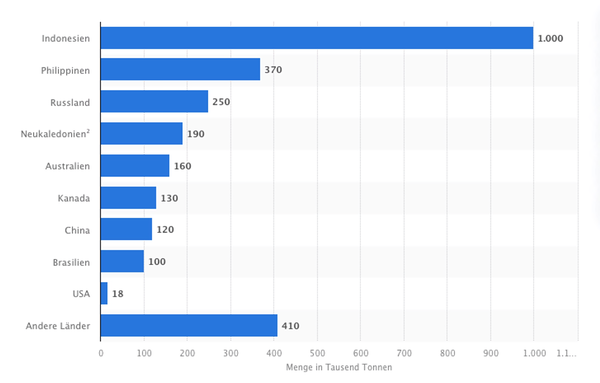
Nickel – the chemical element with the symbol Ni and atomic number 28 – is an important alloying metal used primarily to enhance the properties of steels. Stainless steels containing nickel are particularly corrosion-resistant. Nickel increases the hardness, toughness, and ductility of steels. Not least for this reason, nickel-alloyed steels are frequently used in corrosive environments. Nickel is therefore an important raw material for the steel industry and steel-processing companies.
Nickel Demand Is Rising
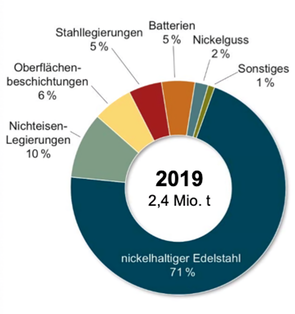
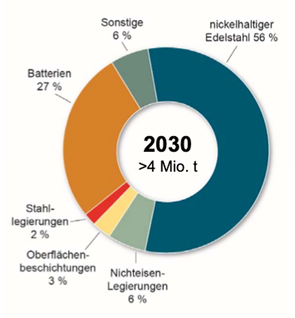
Even without the current supply shortages, nickel demand has been rising. Investment bankers at Macquarie estimate global demand will reach around four million tons per year by 2030. By comparison, the current annual supply of nickel is approximately 2.7 million tons. The primary driver of this growth is the rise of electric vehicles. Although around 86 percent of nickel is currently used for stainless steel and alloys.
According to forecasts, nickel demand for batteries will rise from the current five percent to 27 percent by 2030. As a key figure at electric car manufacturer Tesla, Elon Musk recognized the importance of nickel as early as July 2020 and issued an appeal to Chinese nickel mine operators: “Please mine more nickel. […] Tesla will give you a giant contract for a long period of time if you mine nickel efficiently and in an environmentally sensitive way.”
Against this backdrop, the importance of nickel from Russian mines cannot be overlooked. The conflicts in Ukraine are making nickel even scarcer—especially in Germany. The German Commodity Agency (DERA) estimated Russia’s share of total German imports at 44 percent for February 2022. However, this alone does not explain the exorbitant price spikes.
Experts are certain: The rapid price increase is also due to speculators who had bet on falling prices. Such short sales run into trouble as soon as prices rise contrary to expectations, as happened in early March. As a result, investors are forced to buy nickel. The effect: Prices continue to rise—a vicious cycle.
Keeping things running smoothly. Even during a crisis
At Rostfrei Stahl Geisweid (RFSG), the company is closely monitoring developments in the markets and on the stock exchanges. Concerns that supply bottlenecks could arise again are weighing on the minds of those in the Siegerland region. However, the company is operating from a position of strength. The management is convinced of this. Even during the COVID-19 crisis, employees demonstrated how quickly they are able to respond to current circumstances. An open and transparent approach to all stakeholders has proven effective in communication. Regardless of external circumstances, we are and will remain a reliable partner to our customers.
In Netphen-Deuz, the mood remains calm. Price trends in the raw materials markets are fast-moving. We’re used to that here. Nevertheless, nickel is an important raw material for the metalworking industry. However—and this may sound paradoxical—the company has drawn its conclusions from the COVID-19 crisis. Diversification combined with flexible response capabilities has helped RFSG navigate the last two years relatively well.
In addition, RFSG has always operated with foresight. Throughout the industry, the service center for custom sheet metal cutting is synonymous with delivery reliability. That remains true today. Our own high-bay warehouse is well-stocked, as always. We keep things running. Even in times of crisis.