
 und wählen Sie die Option Zum Home-Bildschrim.
Types of Stainless Steel Processing
Fierce competition combined with intense cost pressure are key factors shaping the current market situation in the metal industry...
Stainless Steel Processing and the Importance of Modern Manufacturing Methods
Recent years have shown that companies’ ability to respond flexibly and quickly to new challenges is becoming increasingly important. Against this backdrop, modern manufacturing methods play a key role in stainless steel processing.
Companies such as Rostfrei Stahl Geisweid (RSFG), which are able to respond quickly to customer requests and also offer short-lead-time delivery, have a competitive edge—provided that sheet metal processing is carried out to certified standards. If the stainless steel processing portfolio also covers a broad spectrum, then the conditions are met to secure an important position in the face of international competition.
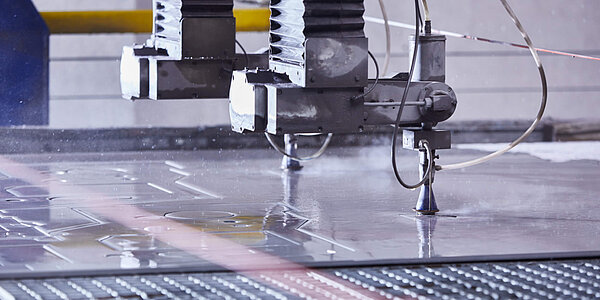
Waterjet Cutting
Cutting stainless steel sheets using the waterjet process is a proven method known for producing exceptionally precise cut surfaces. Simply put, this abrasive cutting process uses water and sand. The cutting performance is achieved through high water pressure of up to 4,000 bar and the smoothing effect of fine-grained garnet sand.
The combination of high pressure and the abrasive action of the sand is particularly suitable for cutting thick sheets. The cutting results are impressive. As a result, waterjet cutting ensures precise cuts with low surface roughness. Tight tolerances in the range of tenths of a millimeter are characteristic of stainless steel cuts made by waterjet. Refinishing of the cut surface is generally not required. Another advantage for the material properties of the stainless steel workpiece is that no heat is introduced during precise waterjet cutting.
Waterjet Cutting | Process:
Waterjet cutting relies on the use of water and sand. The cutting process is achieved through the combined use of a focused high-pressure water jet up to 4,000 bar and the abrasive action of a fine-grained abrasive. Both media can be precisely balanced to produce precise cuts of the highest quality.
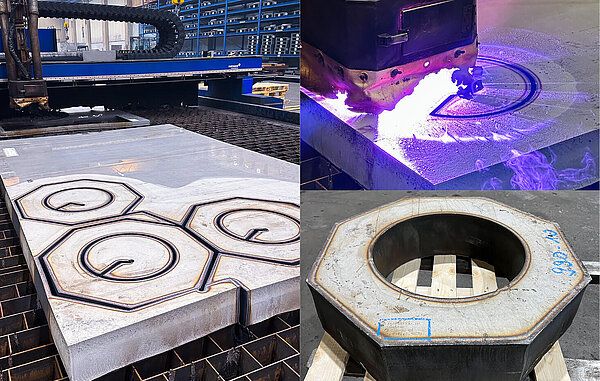
Plasma Cutting
Modern plasma cutting is, in a sense, the gold standard for cutting stainless steel. The process is cost-effective and allows for high cutting speeds. Thanks to high-performance equipment, RFSG is able to precisely cut sheets with a material thickness of up to 150 millimeters. In terms of cut execution, plasma cutting offers extensive freedom to realize every conceivable contour. The result of plasma cutting is characterized by consistently high cut quality, minimal bevels, and few burrs. Furthermore, slag adhesion is virtually nonexistent in plasma cutting.
Plasma Cutting | Process:
Plasma cutting utilizes an electrically conductive gas—known as plasma. At a temperature of 30,000 degrees Celsius, contact between the plasma and the stainless steel material triggers a thermal melting process. During this process, the inert gas forces the molten material out of the joint under high pressure.
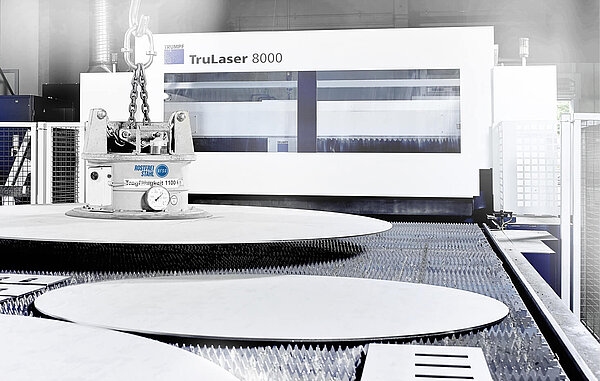
Laser Cutting
Versatility is a hallmark of laser cutting for stainless steel. This is one of the main reasons why laser cutting is so popular for stainless steel sheets up to 20 millimeters thick. Complex shapes can be produced with ease, and the cutting speed remains high despite the precise results. Parameters like these are what make laser cutting so effective.
This cutting process is suitable for stainless steel sheets of varying thicknesses. During the cutting process, the high density of the focused light beam ensures that thermal stress on the workpiece is localized. The rest of the workpiece remains virtually unaffected. This makes laser cutting particularly gentle on the material.
Laser Cutting | Process:
The physical properties of focused light beams make them ideal for use as a cutting tool. Cutting with light waves represents a comparatively wear-free method for separating stainless steel sheets. This is due to the contactless nature of the cutting process. Heat is generated when the light beam strikes the workpiece. This causes the metal to melt or vaporize. The laser beam penetrates the workpiece. The actual cutting process occurs as the molten material is blown out.
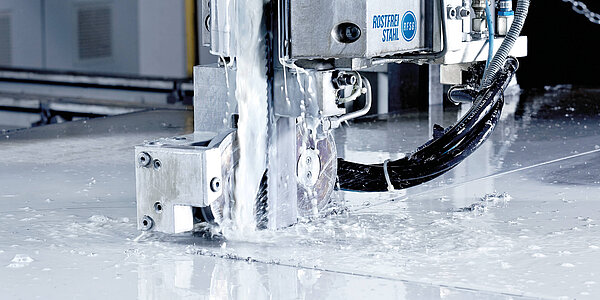
Sawing
Sawing stainless steel in a manner appropriate to the material and application. While this may sound simple, it remains a real challenge for many companies today. Machining stainless steel with a block band saw requires a great deal of expertise and experience. Using a high-performance block band saw, RFSG is able to cut stainless steel with a sheet thickness of up to 150 millimeters while maintaining consistently high quality.
Sawing | Process:
Stainless steel processing with a block band saw offers a whole range of advantages. Cutting stainless steel produces precise and perpendicular cut edges. This makes processing with a block band saw an extremely precise method of stainless steel fabrication. Any rework required is minimal at best. Another advantage of this manufacturing process is that no heat is applied to cut the material. This means that the properties of the stainless steel are not affected by the cutting process.

Belt Grinding
Whenever particularly smooth, high-quality surfaces are required, belt grinding is the manufacturing process of choice. By using grinding belts with different grit sizes, it is possible to produce surfaces with varying degrees of roughness for specific applications.
High-Quality Belt Grinding
A high-quality belt-ground finish gives stainless steel sheets a visually appealing surface that can be individually adapted to the specific application. As experts in stainless steel, RFSG relies on a grit range from 36 to 320. In addition to the experience of our employees and a modern belt grinding machine, high-quality grinding belts are the key to ensuring results of the highest quality. This ensures that no foreign rust contamination can accumulate. To protect the respective stainless steel surface, RFSG wraps sheets upon customer request to prevent damage during transport.

Precision Grinding
The growing demands placed on stainless steel sheets are reflected in the increasing importance of precision grinding. Often, the intended end use requires that a workpiece be manufactured to particularly tight tolerances. In cases like these, the experts in stainless steel cutting at Rostfrei Stahl Geisweid (RFSG) rely on processes such as precision grinding.
Using the wet grinding process, RFSG achieves results with very high precision. The high quality standard of precision grinding applies to parameters such as:
- Flawless surfaces
- Tightest thickness tolerances
- Highest flatness
- Perfect parallelism
Precision grinding | Process:
Well-trained employees, a modern machine park, and extensive experience—with this combination, RFSG is able to achieve a flatness of 0.2 millimeters on the contour. This makes it possible to achieve a surface roughness of RA 1 µm. In terms of thickness tolerances, RFSG operates within a range of ±0.05 millimeters – for parallelism, 0.1 millimeters is achieved over a length of 0.5 meters.
Straightening
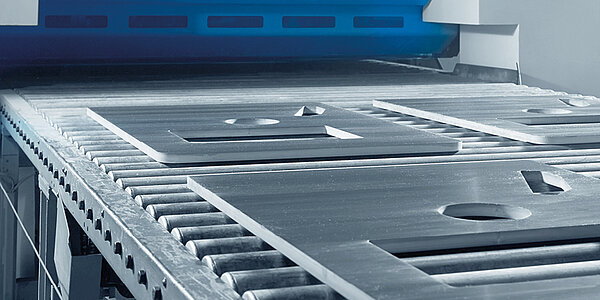
The proper and professional straightening of sheet metal is one of the oldest and, to this day, most important processes in stainless steel fabrication. The experts in stainless steel cutting at RFSG rely on this manufacturing process when precise dimensional accuracy is required for materials with sheet thicknesses of up to 30 millimeters for further processing. In practice, this means: Despite the enormous pressure, the original dimensions remain unaffected by the straightening process. As a result, straightening the stainless steel ensures optimal flatness of the sheet.
Straightening | Process:
Straightening as a stainless steel processing method simply means that a high-performance precision straightening machine applies pressure to a stainless steel sheet. For day-to-day operations at RFSG, this means: A total of 13 hydraulic rollers build up a pressure of up to 180 tons to ensure the dimensional accuracy of the stainless steel sheet. To achieve optimal results, the pressure of the hydraulic rollers can be individually adjusted during the straightening process. The machine is adjusted via computer control. The straightening of stainless steel sheets can be performed in a continuous process.
Bending
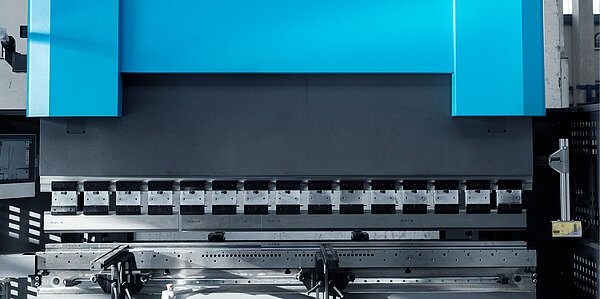
Simply put: Modern equipment allows for the precise bending of stainless steel sheets. CNC-controlled press brakes make it possible to bend sheet metal blanks of various thicknesses, lengths, and depths. One of the key advantages of this process is the high bending angle accuracy it provides. To achieve custom bending results, a bending program is typically created using the manufacturing parameters of a CNC-controlled press brake. Based on a finished part drawing, the sheet is then cut to exact dimensions, and finally, the final component is bent.
Bending | Process:
Bending, as a stainless steel processing method, is classically a forming technique. Under the influence of mechanical forces, sheets are cold-formed. This forming takes place along the entire bend line—simultaneously and with precise angular accuracy. RSFG applies the manufacturing process as free bending with a die (three-point bending).
Comparison of Manufacturing Processes for Stainless Steel Fabrication
There is no one-size-fits-all answer to the question of which manufacturing process is best for fabricating stainless steel sheets. The most suitable solution always depends on the specifics of each individual case. This involves answering many questions:
- What needs to be cut?
- How precise does the component need to be?
- What further processing is required?
- What batch sizes need to be processed?
- What is the maximum allowable investment?
- What is the intended application of the workpiece?
Parameters such as these play a decisive role in determining which manufacturing process is particularly suitable for the specific case. For decisions in day-to-day business, this means: There is no single “ultimate” process for stainless steel machining. Customers must rely on the expertise and know-how of the service provider.
RFSG Manufacturing Services
From the customer’s perspective, it is advantageous when companies offer the widest possible range of stainless steel processing services. Only then can the highest-quality and most cost-effective process be guaranteed. As a trusted partner to industry, Rostfrei Stahl Geisweid (RFSG) offers all services under one roof:
- Sheet metal cutting
- Sheet metal processing
- Warehousing
- Services
RFSG’s core competence is precision stainless steel cutting. The following manufacturing processes highlight the company’s capabilities:
- Waterjet cutting
- Plasma cutting
- Laser cutting
- Sawing
- Belt grinding
- Precision grinding
- Straightening
- Bending
Outlook
Customers seeking to combine the highest quality with cost-effectiveness benefit from the expertise of specialized companies offering a broad range of stainless steel processing services. This ensures that the best possible manufacturing process is used for stainless steel cutting, because: The various methods for cutting stainless steel each have their own unique advantages and characteristics.